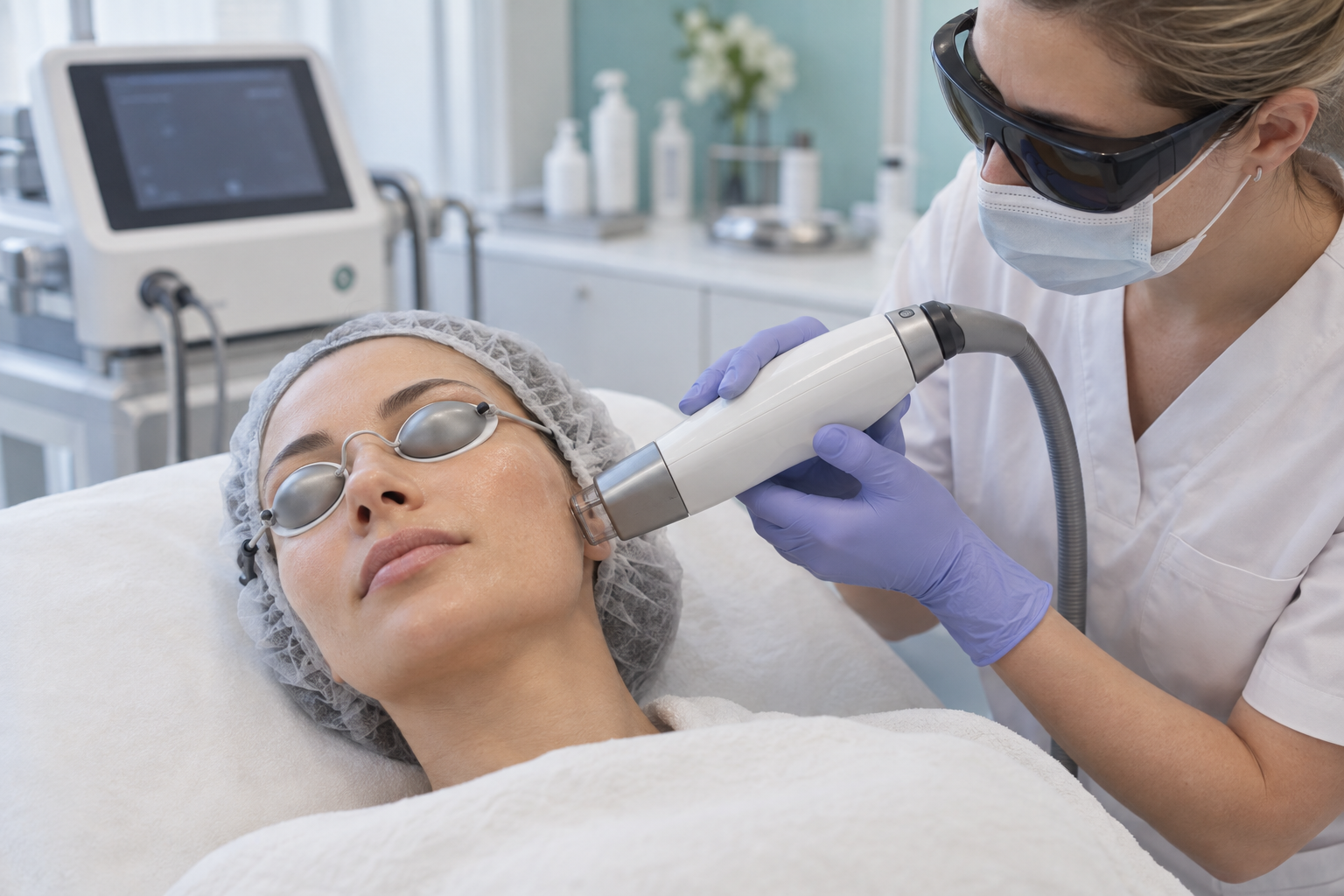
How to begin a skin assessment with
Begin with a doctor consultation or the shared treatment request form. AI helps suggest a specialty from your description; review or change the selection from available areas, including Dermatology. The request reaches the relevant doctor pool. Follow messages or video proposals in your account. The form alone does not determine the appropriate procedure; the doctor may discuss further information or in-person assessment. Clarify who assesses and treats you, alongside any device being considered.
Start with a clear goal
‘Skin rejuvenation’ is a broad term. Uneven colour, scars, texture, wrinkles and unwanted hair may need different assessments. Explain your main concern and the degree of change you expect. Ask how the proposed approach might address that goal and what it will not change. The same device should not be assumed to suit everyone with identical settings or results. Assessment comes before selecting a method.
Peels and resurfacing
Chemical peels and resurfacing approaches may be considered for skin surface, texture or colour. Recovery needs vary with treatment depth. Tell your clinician about active infections, scarring history and previous procedures.
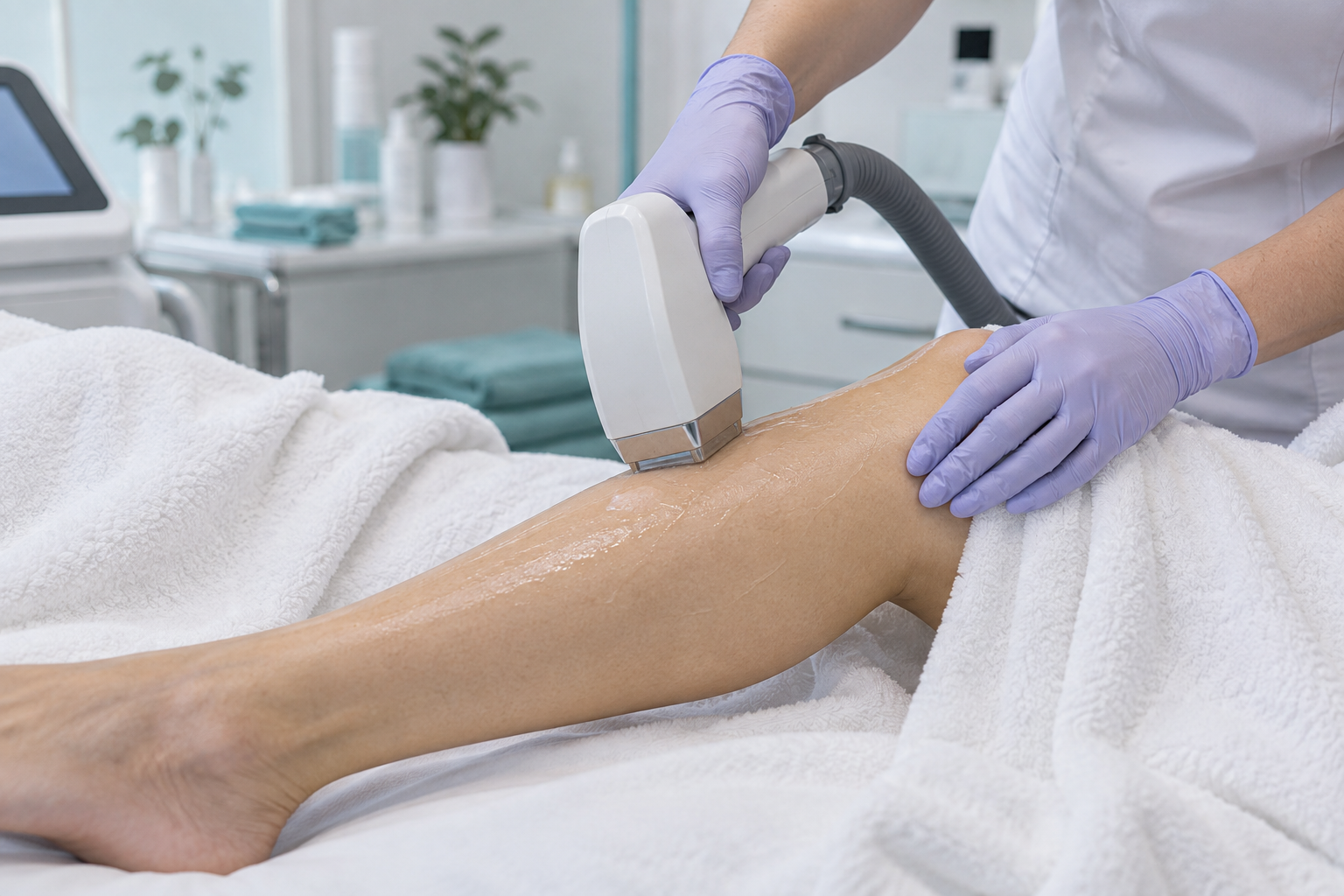
Laser, light and energy-based approaches
Laser, IPL and radiofrequency target different concerns and are not interchangeable. Assessment for resurfacing, some pigmentation concerns, scars or unwanted hair may differ. A suspicious skin lesion requires medical assessment before cosmetic treatment.
Share your skin history
Discuss previous laser treatments, peels or other procedures, skin products and medicines. Describe prolonged redness, pigmentation changes or scarring after earlier treatments. Mention recent sun exposure, planned holidays or another treatment affecting the skin when discussing timing. Instructions about stopping products or changing medicines should be individual; do not make changes yourself based on generic online lists.
Skin type, risk and aftercare
Possible risks include burns, infection, scars and lighter or darker pigmentation. Risk varies with skin tone and the method used. Session numbers, healing, sun protection and product use belong in an individual plan; a permanent result from one session cannot be guaranteed.
Ask about aftercare as well as session numbers
If several sessions are proposed, ask about the purpose, spacing and assessment of progress for each. Clarify what findings after the first session might change the plan. Request written instructions on cleansing, products, sun protection and return to daily activities. The team should explain expected appearance and concerning symptoms for your treatment. A procedure that looks simple still needs appropriate preparation and follow-up.
Considering session and travel plans together
Discuss the proposed treatment, check-ups and any need for multiple visits with your doctor. Once treatment details are recorded and referred to the agency in , a proposal can include travel services. Ask separately about sessions, visits, accommodation dates and change conditions. The general information here is not a device or procedure recommendation for you. Before deciding, confirm that the clinical plan and proposal align; arrangements outside the platform fall outside ’s coordination scope.
Sources and scope
General information, not a substitute for an individual clinical assessment. Links lead to relevant sources and service pages.