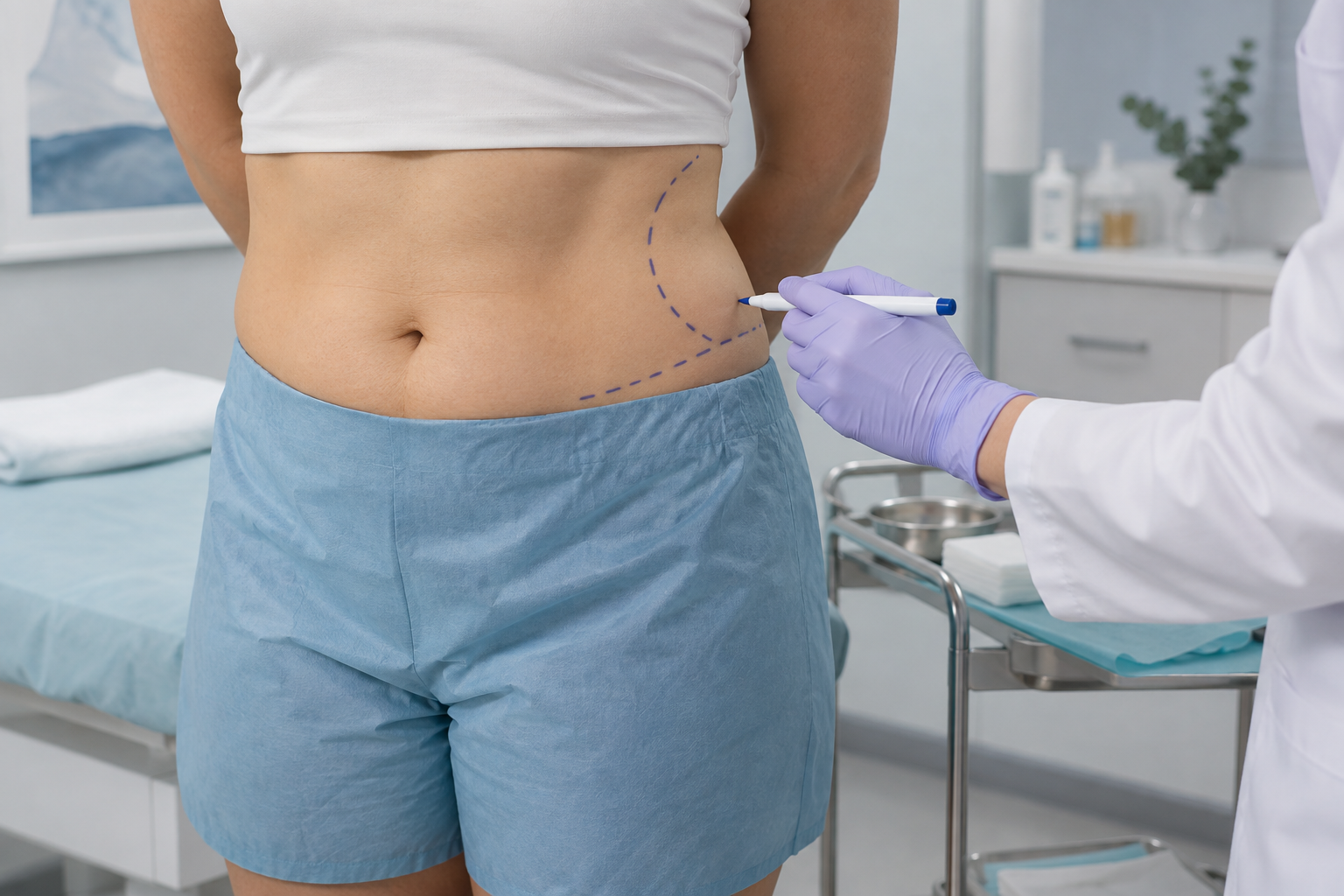
Fat, excess skin and goals
Explain the area that concerns you and what you want to change in daily life. Prepare details of recent weight changes, previous surgery and pregnancy plans. Changing a region's contour and managing weight have different aims. Ask the doctor to explain what the proposed procedure can and cannot change. Do not assume that two procedures involving the same area are interchangeable.
Liposuction: scope and limits
Liposuction removes fat from selected areas; it is not a treatment for obesity or a way to eliminate cellulite and stretch marks. Skin elasticity and the target area matter. Ask what will actually be done rather than relying on a device's commercial name. Uneven contours, altered sensation and more serious complications are possible. If several areas are proposed, discuss the overall scope and its implications for recovery.
Abdominoplasty
Abdominoplasty can remove excess skin and tissue and may involve work on the abdominal wall. Partial and full approaches differ in scope; a smaller incision does not meet every need. Discuss scar location and any treatment around the navel. This is major surgery, not a quick route to weight loss. Use the doctor's individual advice to plan help at home, check-ups and time away from work.
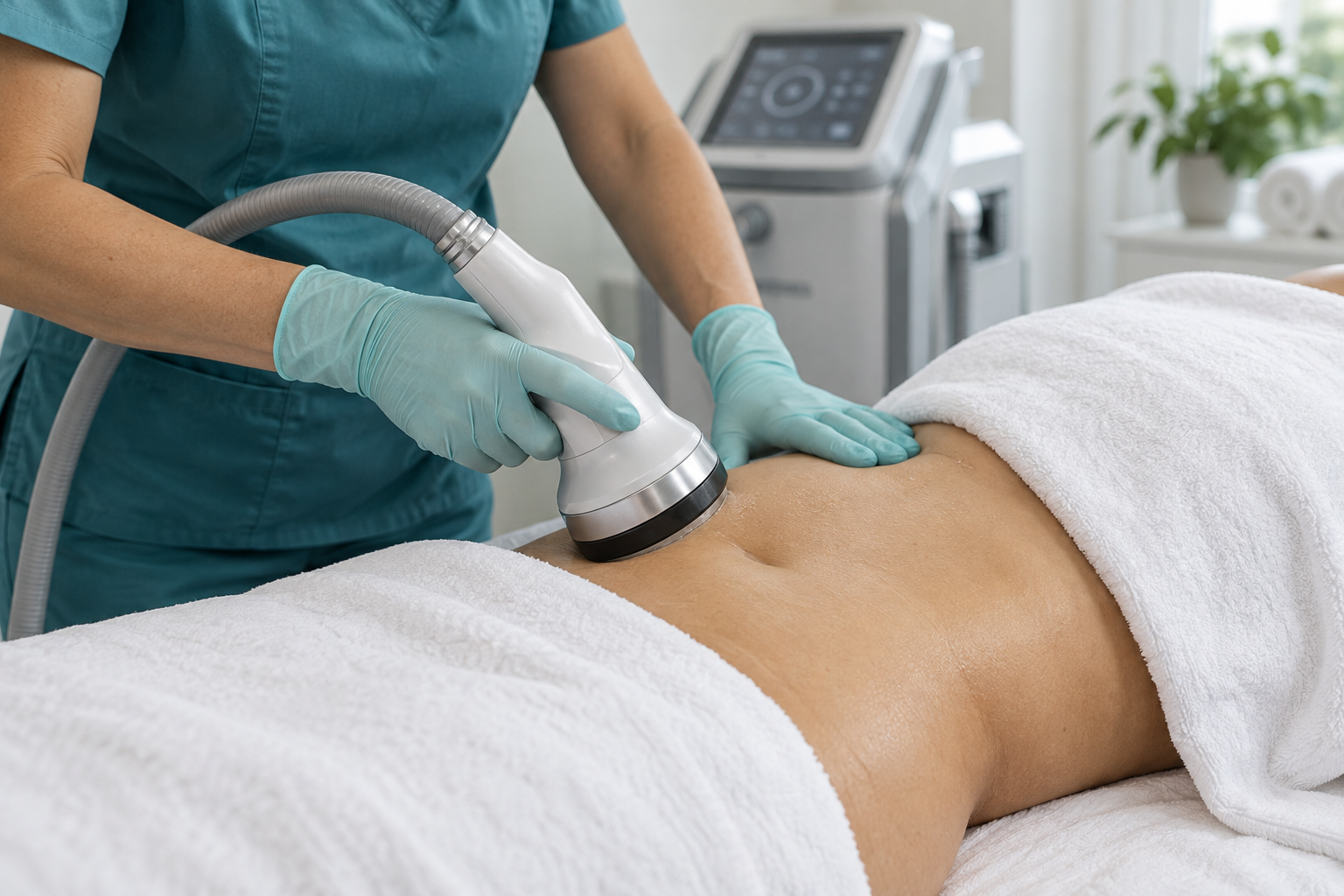
Arms, thighs and surgery after weight loss
After substantial weight loss, different procedures may be considered for excess skin on the arms, thighs or trunk. Priorities, weight history and overall health are assessed together. Treating every area in one operation may be unnecessary or unsuitable. Discuss scar placement in relation to clothing preferences. Mention previous weight-management treatment and operations in your request and allow for the doctor to seek further records or assessment.
Combined procedures and staged planning
A label such as a 'body package' does not establish identical or suitable treatment for everyone. List each proposed procedure separately and ask why combining them is being considered. Discuss how one operation versus staged procedures affects your risks, recovery and costs. Inclusion in a package does not oblige you to undergo an unwanted procedure. The written plan should identify the number of operations, areas involved and later decision points.
From assessment to a clinical plan
offers a specialist consultation first or a direct aesthetics request. After describing your goals, review and, if necessary, change the AI-assisted specialty suggestion. A doctor may ask for information or propose an online consultation. The discussion covers expectations, medical history and questions requiring an in-person examination. If a suitable clinical plan emerges, you can consider travel and a proposal; the AI suggestion does not determine surgical suitability.
Risks, wound care and support
Assessment should cover risks including bleeding, infection, fluid collections, wound-healing problems, asymmetry and blood clots. Discuss care needs before extensive procedures. Request written instructions on movement, support garments and reviews; do not start medicines or anticoagulants independently. Seek urgent help for symptoms such as sudden breathlessness or chest pain rather than waiting for an online response. Also establish a clinical contact for non-urgent questions.
Travel, returning home and proposal scope
Tell the doctor about long journeys, companion needs and support at home. Do not base your return date solely on a hotel package. After referral of the clinical plan, accommodation and transfers are discussed in an online agency meeting. Request written details of the surgery, hospital services, care and reviews covered. Clarify responsibilities and costs for an extended stay or additional assessment. An enquiry is not a confirmed booking; allow time to have your questions answered before deciding.
Sources and scope
General information, not a substitute for an individual clinical assessment. Links lead to relevant sources and service pages.