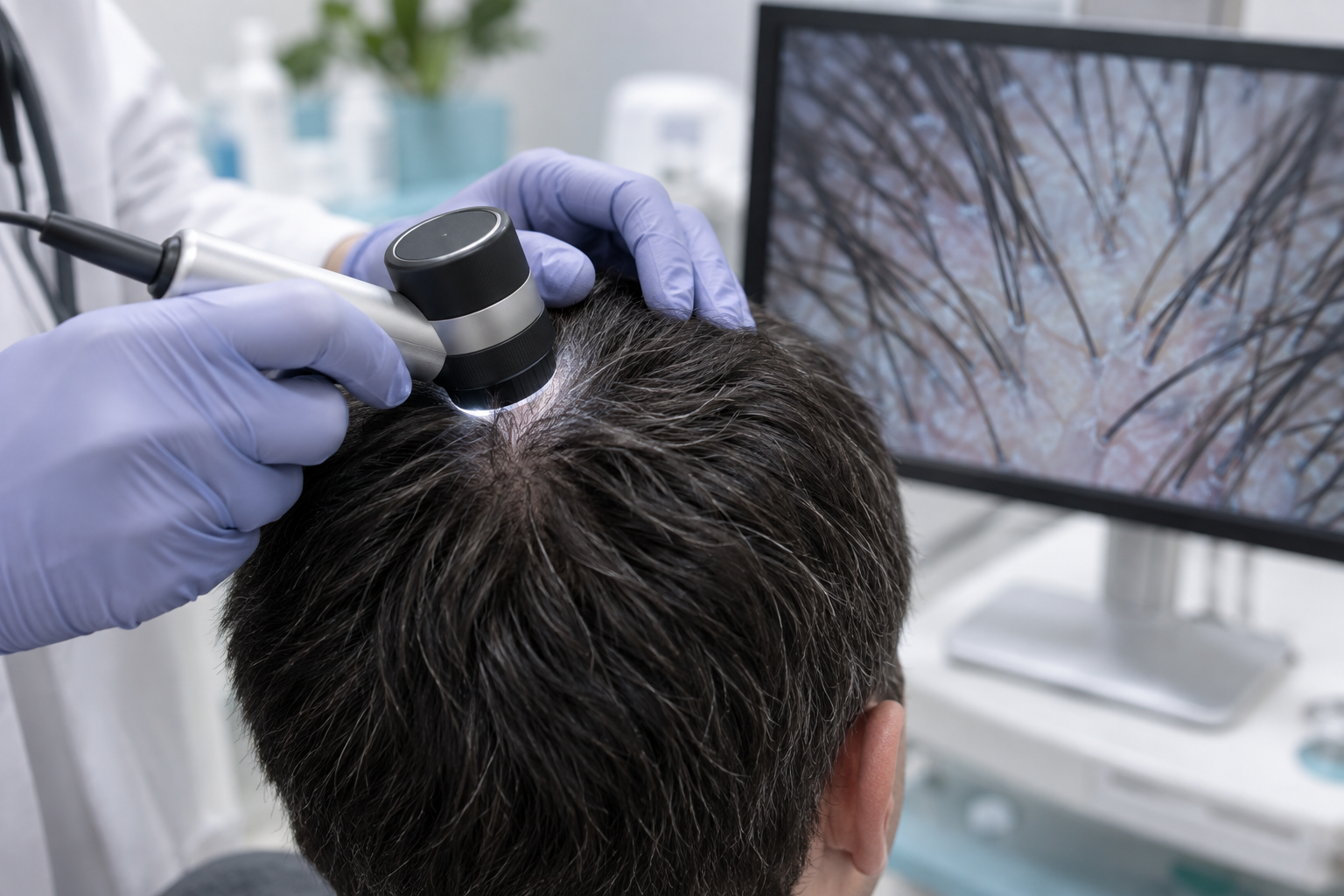
Submitting a Hair Transplant enquiry with
Describe your hair-loss goals and the requested information in the shared treatment enquiry form. Review the AI suggestion and choose Hair Transplant where relevant. Your request goes to the specialty’s doctor pool, and you can view messages or video proposals in your account. If you want to begin by assessing hair loss, use the specialist consultation route. The AI suggestion supports routing; it does not decide your suitability, technique or graft count.
Who may be assessed?
Not all hair loss is suitable for transplantation. Its type and progression, scalp condition and expectations are assessed together. Medicines or other approaches may also be considered. Donor supply is limited; graft count alone is not a measure of quality.
Assessment before the technique name
A technique’s visibility in advertising does not make it the right choice for you. Explain the duration of hair loss, previous assessments and expectations. Discuss the hairline, donor area and possible future changes together. The same graft count will not necessarily create the same appearance in different people. Ask which area the plan addresses and why its goal is realistic, rather than comparing only price and graft numbers.

What do FUE and FUT describe?
FUE obtains follicles individually, while FUT obtains them from a strip of scalp. The choice depends on individual characteristics and the surgeon’s assessment. A commercial label alone does not demonstrate a different outcome or superiority.
Understand the team’s responsibilities
The person handling enquiries, the clinician preparing the plan and team members performing different stages may be different. Ask who is responsible for each stage and how you can reach the clinician. Request explanations about protecting the donor area, pain management and aftercare; commercial technique labels do not replace a detailed plan. Clarify whether check-ups, care products and possible extra visits are included.
Recovery and follow-up
Swelling, tenderness and scabbing can occur; risks include infection, scarring and graft failure. Results take time and surrounding hair may continue to thin. Clarify who performs the procedure, aftercare instructions and whom to contact about unexpected symptoms.
Put follow-up on a timeline
Initial care, early review and outcome assessment may involve different appointments. Ask what will be checked at each stage. If photographs are requested, the team should explain the views needed and the approved sharing channel. Another person’s recovery timeline online should not be your only reference. For unexpected symptoms or concerns, use the contact route provided rather than waiting automatically for a scheduled review.
Discussing procedure scope and follow-up responsibilities
Ask who assesses you, what the procedure includes and how check-ups work, alongside graft count and package price. If planning proceeds after assessment, procedure and duration details can be recorded and referred to the agency. Review accommodation, transfers and other services individually and clarify how to contact the responsible team after returning home. The enquiry and proposal process does not guarantee transplantation or a particular outcome. Make sure your individual plan is clear before deciding.
Sources and scope
General information, not a substitute for an individual clinical assessment. Links lead to relevant sources and service pages.